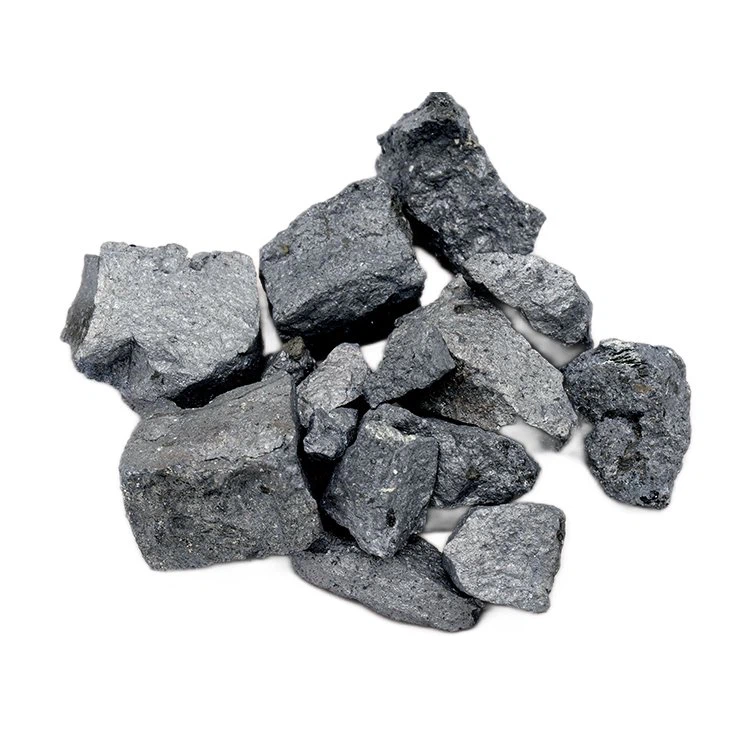
Nodulizer
Specification:
| Brand | Code | Mg(%) | Re(%) | Si(%) | Ca(%) | Al(%) | Ti(%) | Fe(%) |
| FeSiMg5Re2 | 5-2 | 4.0-6.0 | 1.0-3.0 | 38-44 | 2.0-3.0 | <1.0 | <0.5 | Balance |
| FeSiMg6Re1
|
6-1 | 5.0-7.0 | 0.5-1.5 | 38-44 | 2.0-3.0 | <1.0 | <0.5 | Balance |
| FeSiMg7Re1
|
7-1 | 6.0-8.0 | 0.5-1.5 | 38-44 | 1.0-1.5 | <1.0 | <0.5 | Balance |
| FeSiMg7Re1
|
7-1 | 6.0-8.0 | 2.0-4.0 | 38-44 | 2.0-3.5 | <1.0 | <0.5 | Balance |
| FeSiMg8Re3
|
8-3 | 7.0-9.0 | 2.0-4.0 | 38-44 | 2.0-3.5 | <1.0 | <0.5 | Balance |
| FeSiMg8Re5
|
8-5 | 7.0-9.0 | 4.0-6.0 | 38-44 | 2.0-3.5 | <1.0 | <0.5 | Balance |
| FeSiMg8Re7
|
8-7 | 7.0-9.0 | 6.0-8.0 | 38-44 | 2.0-3.5 | <1.0 | <0.5 | Balance |
| FeSiMg10Re7
|
10-7 | 9.0-11.0 | 6.0-8.0 | 38-44 | 2.0-3.5 | <1.0 | <0.5 | Balance |
| FeSiMg | 10-1 | 10-11 | 0.8-1.2 | 45-50 | 1.5-2.5 | —– | —– | Balance |
| Also can execute the production according to customer’s special requirement | ||||||||
Product Introduction
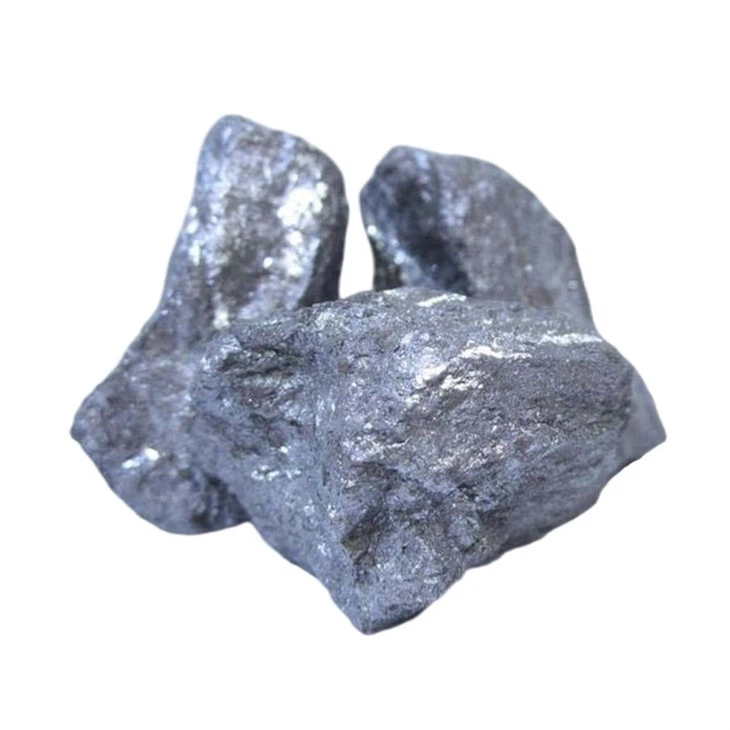
Silicon Magnesium Inoculant is an additive used in cast iron to promote graphite crystallization, improve the structure and mechanical properties of castings, and is commonly used in the foundry industry to improve cast iron quality.
Product Applications
Foundry Industry Applications
Silicon Magnesium Inoculant is primarily used in the foundry industry. By adding it to molten iron, it promotes uniform graphite precipitation, improves the microstructure of the cast iron, and thereby enhances the strength and toughness of the castings and reduces defects.
Machinery Manufacturing Industry Applications
In machinery manufacturing, this product is used to improve the wear resistance and processing properties of cast iron parts, enhance the material’s overall mechanical properties, and increase the service life and reliability of the parts.
Automotive Industry Applications
In the automotive casting production process, Silicon Magnesium Inoculant can control graphite morphology, optimize the casting structure, and enhance the performance and durability of engine and chassis components.
Why Choose Us
Advanced Equipment
Our facility is equipped with state-of-the-art Graphitization furnaces, Calcining furnaces, Crush&screen systems, Electric Arc Furnaces (EAF), and Metal Recycling Facilities (MRF). This advanced equipment ensures high-quality production processes.
Wide Product Range
We specialize in producing a diverse range of products including Carbon and Graphite Recarburizer, Calcium Aluminate (both Fused and Sintered), Calcined Bauxite, Mullite (Sintered and Fused), Ferro Alloys, Inoculant, Nodulizer, Black Silicon Carbide, and Steel Shot.
Global Reach
Our products are well-received globally, with strong sales presence in the USA, Mexico, Spain, Germany, Italy, Poland, the Middle East, Egypt, India, and Southeast Asia. They have garnered excellent reviews for their quality and performance.
Efficient Production
The plant boasts three sets of Electric Arc Furnaces (EAF) and one set of Metal Recycling Facilities (MRF). These facilities enable us to produce 80,000 metric tons per year of Foundry Ceramic sand, Calcium Aluminate, Calcium Ferrite, and Calcined Bauxite.
FAQs
Q: What is the recommended dosage of Silicon Magnesium Inoculant for gray iron castings?
A: The typical dosage ranges from 0.2% to 0.7% by weight of the total charge. However, it’s essential to conduct trials to determine the optimal amount for your specific application and desired properties.
Q: How should Silicon Magnesium Inoculant be stored to maintain its efficacy?
A: It should be stored in a dry, cool place away from direct sunlight and moisture. Ensure that the packaging is sealed properly to prevent contamination and degradation over time.
Q: Can Silicon Magnesium Inoculant be used in all types of ferrous castings?
A: While primarily used for gray iron castings, it can also benefit ductile iron under certain conditions. However, its effectiveness may vary, so it’s advisable to consult with a metallurgist or conduct tests before widespread use.
Q: Is there a risk of over-inoculation when using Silicon Magnesium Inoculant?
A: Yes, excessive use can lead to issues such as increased brittleness or changes in microstructure. Therefore, precise control of the dosage is crucial, and regular analysis of the cast iron’s properties is recommended.
Q: How does Silicon Magnesium Inoculant affect the machinability of cast iron?
A: Properly applied, it can improve machinability by refining the graphite structure, making the material easier to machine. However, too much can make the material more abrasive, negatively impacting tool life.
Q: Are there any health hazards associated with handling Silicon Magnesium Inoculant?
A: As with many industrial materials, inhalation of dust or prolonged skin contact should be avoided. Use appropriate personal protective equipment (PPE) like gloves and masks when handling, and follow safety guidelines for industrial materials.
Q: Does the particle size of Silicon Magnesium Inoculant matter?
A: Yes, the particle size significantly affects its efficiency and how quickly it dissolves in the molten metal. Finer particles tend to dissolve faster and distribute more evenly, leading to better inoculation results.
Q: Can Silicon Magnesium Inoculant be recycled or reused in the foundry process?
A: Generally, it’s not designed for reuse due to potential contamination and loss of effectiveness upon exposure to air and moisture. Fresh inoculant is typically used for each pour to ensure consistent quality.
Q: How does temperature during casting affect the performance of Silicon Magnesium Inoculant?
A: Higher temperatures can accelerate the dissolution and reaction of the inoculant, potentially leading to more effective inoculation but also requiring careful control to avoid over-inoculation or other defects.
Q: Is preheating of Silicon Magnesium Inoculant necessary before addition to the melt?
A: Preheating is generally recommended to remove any absorbed moisture, which can cause unwanted reactions or reduce the efficacy of the inoculant. A common practice is to preheat it to around 150-200°C before addition.
Hot Tags: silicon magnesium inoculant, China silicon magnesium inoculant manufacturers, suppliers, factory, High Magnesium Alloy Lump, Si ca Alloy, Ferro Silicon Briquette, , Calcium Silicon Manganese Alloy, Silicon Magnesium Inoculant